More Flashman, Less Superman
British pragmatism versus American masculine spectacle

I should start by saying that a number of American Mutuals on X have been a genuine inspiration to me, Mystery Grove in particular, for consistently arguing for a cool head and letting events play out. A century from now, Donald Trump will likely be remembered as the figure who arrested Western decline through force of will. 11 months in, given the reality of separation of powers, the record looks solid, an A, or an A-minus at worst. We in Britain should be immensely grateful to our friends across the pond for keeping a check on Keir Starmer exactly when we needed it. Starmer will attempt various constitutional vandalism out of spite but his sycophancy of the man in the oval office means the worst excess will be curved. What’s been most frustrating is watching hyper-performative, masculinised American commentary declare failure because Trump hasn’t acted like a comic-book autocrat.
There are plenty of problems with the British online right, and I’ve criticised most of them at length, but one thing that’s refreshingly absent is the kind of totalising, cosplaying masculinity that dominates American commentary. The gun fetishism, the performative anti-Europeanism, the constant posturing all tend to produce a sort of main-character syndrome, where bearded big accounts repeatedly declare that Donald Trump has “failed” because he hasn’t pulled a rabbit out of the hat or behaved like a comic-book autocrat. Some of this is just low-level stupidity. Trump does not operate in a parliamentary system. A British Trump, or Trump himself, were he Prime Minister, would wield vastly more executive authority. He doesn’t. He governs through separation of powers. There is not going to be a march on Washington, and the demand for one says more about American masculine fantasy than political reality. But other times is the result of online Greek Chorus that feels the need to performatively maximise their positioning.
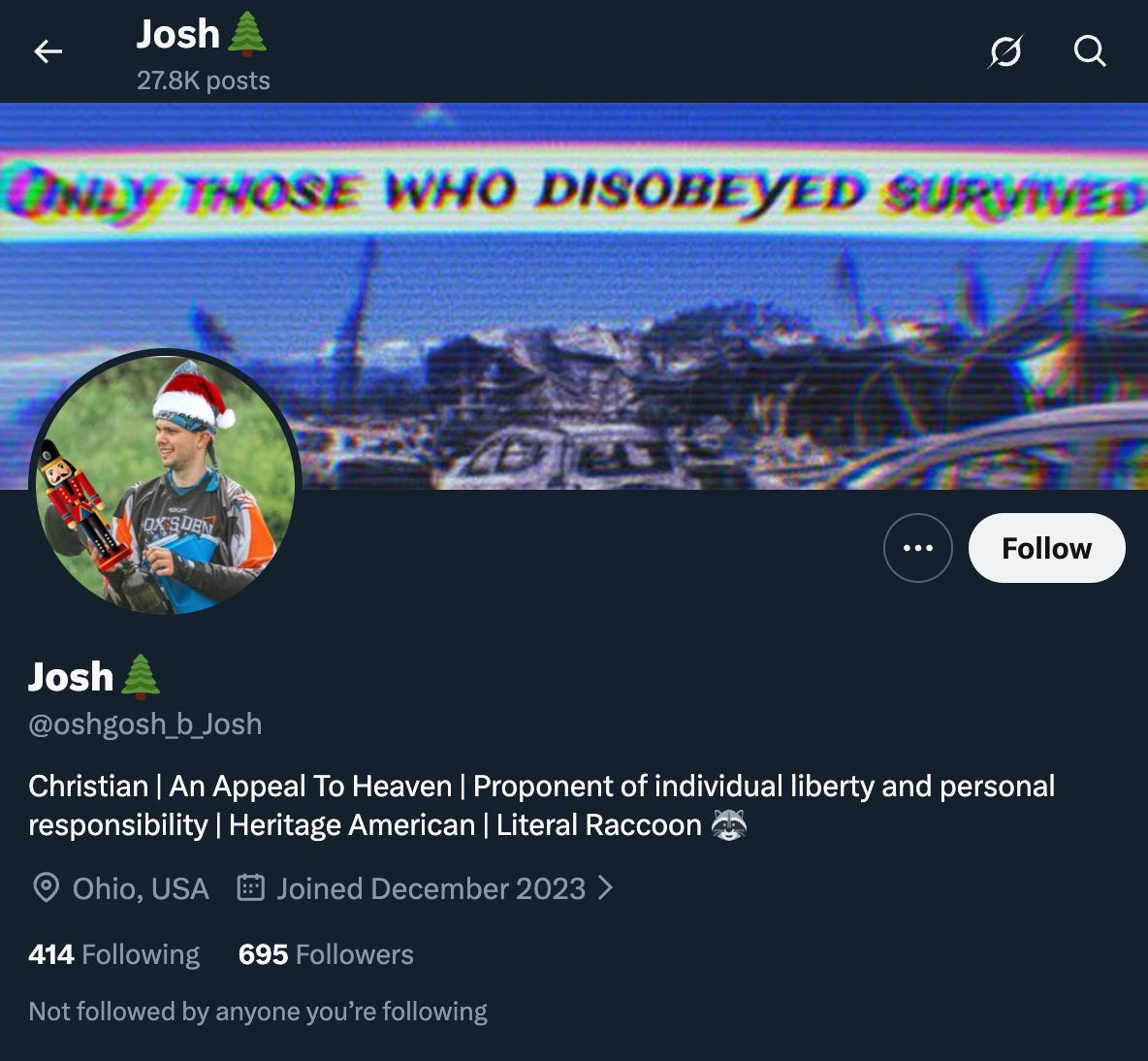
Without getting too personal the thing that strikes me about Modern affluent American male life is de-physicalised to an almost comic degree. I am a massive fan of the motor car, however even I admit the car dependency in the United states is intensity limiting for spontaneity, it’s not just the case that you need to drive out to your friends you need the car for everything. If you were trying to design a civilisation that systematically removed the everyday, bodily tests that once gave men a sense of competence, you’d land somewhere close to the US suburbs.
To answer what happened to traditional American masculinity, you first have to define what it actually was. Historically, male status came from doing dangerous or exhausting work, being embedded in a collective endeavour - the pit, the factory, the dock, the regiment - and from male-only social space. Contemporary American life offers almost none of this. The typical American man sits in an air-conditioned office with the thermostat fixed at 70 degrees, doesn’t socialise after work in the way British men do, and is unlikely to play any sort of regular, participatory team sport at the weekend. The workplace itself is highly feminised, particularly in large corporates. I never really encountered the tyranny of HR in Britain, even at the height of woke excess, smaller firms largely ignored it. Where you did see performative LGBT or HR moralism, it was overwhelmingly in American multinationals. In my own industry, HR tended to be run by brassy matriarchs who were more likely to be committing the sexual harassment than policing it.
Sport is one of the clearest lenses through which to see the mutation of American masculinity. In the early twentieth century, America’s national sport was baseball, and for good reason. It’s intuitive and required little-equipment. All you need is a bat, a ball, and some markers, and you can play it in a park. America’s national story is embedded in it: Babe Ruth, the White Sox, Jackie Robinson. Crucially, it’s one of the very few American sports that has been successfully exported and genuinely embraced elsewhere, in Japan, in Cuba, as a game people actually play.
By the late 1990s, baseball was effectively moribund, revived only briefly by record-breaking figures like Barry Bonds, with a little help from Mr Steroid. In contrast, the dominant American sport today is American football, a game that can only be played by an aggressively elite minority, requiring extreme size, specialist training (from very young), and armour. It’s watched religiously, you don’t need me to tell you how big Super Bowl is. Yet almost never played casually: Americans don’t put on pads at the weekend and have a run around the way Brits pull on bibs and play five-a-side.
The shift from a participatory, playable national sport to a hyper-specialised, spectator one mirrors a broader cultural change: masculinity moving from something lived and embodied to something consumed.
And once you see it, the pattern appears everywhere. Gun culture slides from use into fetish, taticool gear, ritualised display, even though, in practice, self-defence law in many US states is far less permissive than people imagine, and often more restrictive than in Cuck Island. Tucker Carlson films his own TV show in what looks like a shed that hasn’t seen a speck of sawdust.
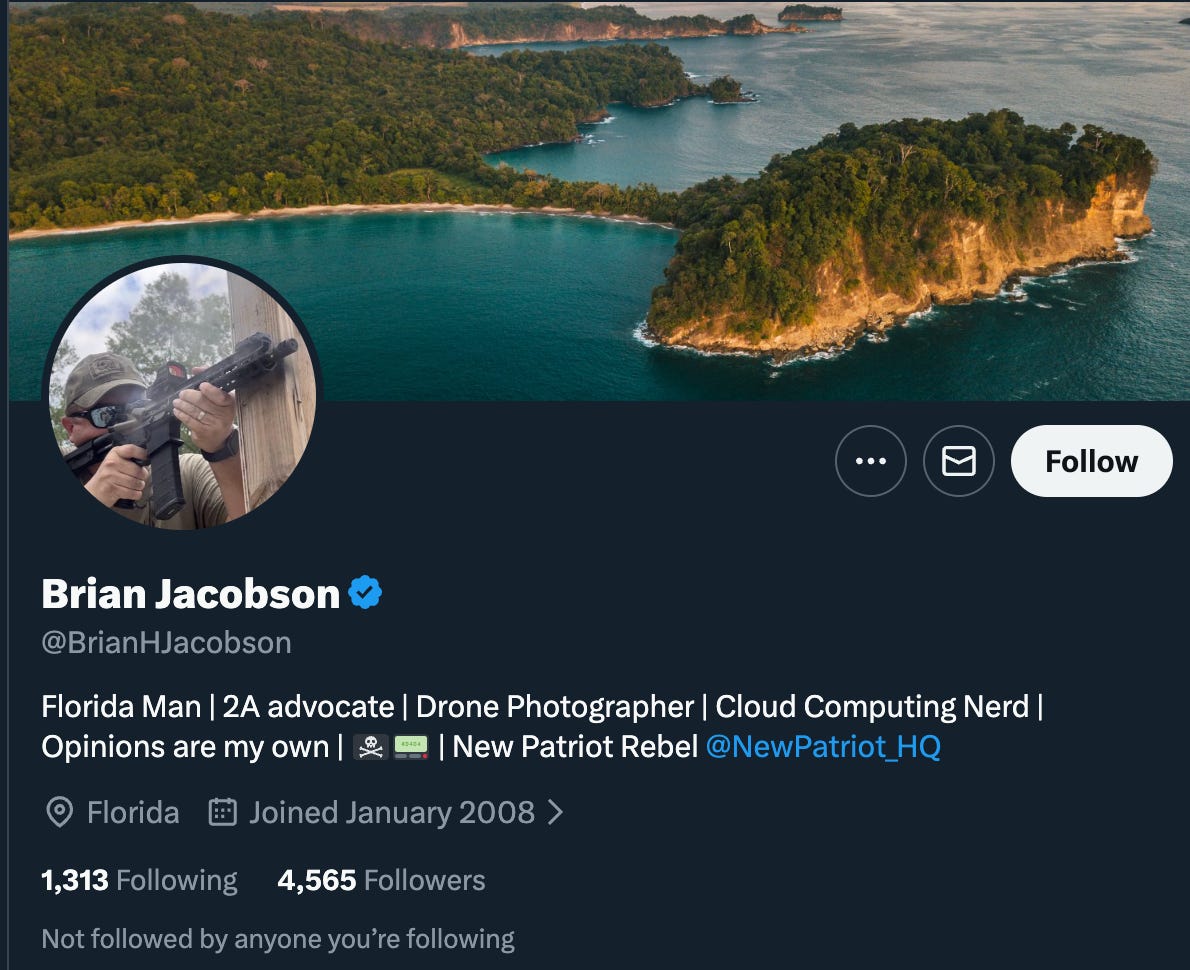
Vehicles follow the same logic: American pickup trucks in the 1970s were physically smaller yet more useful, with longer beds, because they were *actually* tools. Today’s trucks are enormous, and while you can blame CAFE standards they also clearly responding to demand, does a red state accountancy equity partner really need a Ford F-250 super duty?

The same shift shows up in gym culture. There is nothing wrong with lifting weights, more people should, but it’s telling that previous generations who were genuinely physically fit didn’t engage in this kind of narcissistic sculpting. Strength once came from use; now it’s aestheticised. Around that has grown a thicket of hyper-codified rules: diet doctrines, cold exposure rituals, abstinence regimes, optimisation mantras, all simulating hardship without real risk. Even Silicon Valley’s obsession with optimisation reads as a technocratic distortion of the same impulse: masculinity turned inward.
You see this show up in pornography, Mid-20th-century erotic culture (magazines, cinema) leaned on suggestion: lighting, dialogue, clothes coming off slowly, the sense of being chosen, The erotic charge came from context and anticipation. These days pornography is far more about spectatorship, watching another man have intercourse with a woman. And I’m afraid it was the American porn industry have normalised this.
As noted earlier, much of this deviancy appears to be a direct by-product of rising living standards and the transition to a post-industrial society. This affected culture for a long stretch of the Pax Americana, even if they’re now fading, the idealised American hero was the superhero: an impossibly transcendent great man. Either he possessed near-supernatural intelligence and resources (Batman), or he was literally alien, immune to gravity, and invulnerable (Superman).
British comics largely resisted this model. Judge Dredd aside, itself more satirical warning than aspiration, British writers often set their stories in the United States, precisely because the superhero mode felt culturally foreign. When Britain does idealise masculine heroes, they’re almost never embodiments of raw force or moral purity. They’re problem-solvers under constraint. Men improvising inside a mess they didn’t choose. You see this most prevalent in the World War 2 myth, The boffins at Bletchley Park cracking the blooming enigma, the Few RAF pilots defending against impossible odds, The escapees from Colditz.
British fictional characters are also flawed, Harry Flashman is coward, a liar, a rake, and yet an accidental witness to imperial history, it’s a vaguely comic character but one that you are rooting for. Even Richard Sharp, undoubtedly physical and very tough but permanently insecure, and painfully aware he doesn’t belong. Sharpe’s violence is functional. His class anxiety never disappears, even when he wins.
Even the greatest British hero put to literature James Bond who’s often misread through an American lens as a brute fantasy, when he really isn’t. Although the dreadful Daniel Craig did his best to destroy the character and is now starring in explicit gay art house cinema (make of that what you will). The Point is Bond can fight. bond can shoot, but those are competencies. When Bond throws punches, something has already gone wrong, even his skills in seduction are contextualised in a Swiss army knife of talents: Baccarat, language skills, marksmanship. Crucially, Bond is morally conflicted. The character allows guilt and ambiguity to coexist with heroism. Pierce Brosnan’s Bond handled this properly, most clearly opposite Alec Trevelyan in GoldenEye.
“You’ll find forgiveness in the arms of all those willing women,” Trevelyan sneers, “for all the dead ones you’ve failed to protect.”
Nothing in that exchange distracts from the fact that Bond is a hero, but it insists that heroism comes with moral cost.
America, by contrast, struggles to tolerate flaws in its mythic figures. One of its most famous superheroes is quite literally called Captain America: the embodiment of a national ideal, not merely a man within a nation. Even when the United States is portrayed as corrupted, the hero remains abstract and morally intact.
The relevance to online discourse is this: American political commentary, especially on the right, is increasingly shaped by a hyper-performative model of masculinity that is ill-suited to long political games. It rewards grandstanding, instant outrage, and theatrical declarations of betrayal or failure. British masculinity, at its best, offers a different model: ingenuity under constraint, calm under pressure, getting out of a bind rather than crashing through a wall. I am not sermonising, I am just asking you to bear that in mind.
Politics is not a Marvel film or an RPG. There is no final boss, no moment where everything resolves itself through force of will. The woke are on the run in the United States, but they will be back, already you can see abundance-liberal types attempting to assemble an anti-MAGA coalition aimed at J. D. Vance in 2028, suddenly “discovering” the exclusion of white men from various professions as if this were a new concern. Don’t believe it for a second.
The right doesn’t need louder tantrums or purity spirals. It needs patience, tactical nous, institutional memory, and the ability to absorb insults without disintegrating. In other words: less superhero fantasy, more Harry Flashman, not because he’s admirable, but because he survives.
This grenade needed to be thrown.
I went to university with a lot of Americans, and even the most benign, downbeat boozer filled with scots alkies, and harmless locals was an overwhelming, vaguely threatening experience for them that led to some very strange behaviour, a sort of hastily assembled defensive code of honour that just came across as stilted and borderline autistic