Civil War in 2026
LaoCailarry's self indulgent civil war article

If you’re a Substacker worth your salt, you know there’s always good mileage—and clicks—to be had in writing the obligatory piece about Britain heading towards civil war so here is mine (could be completely wrong of course)- Bon Appétit.
America
For years, most theorising about civil conflict or “national divorce” has centred on the United States — and with good reason. Unlike Britain, America has sustained a clearly defined culture war since the 1960s, with only brief pauses. It also carries the unresolved legacy of “states’ rights,” with entire populations still identifying with states that once seceded, fought under their own flags, and printed their own currency. Until recently there remained a lingering romanticism toward “Dixie” — and under the current administration one suspects it may yet enjoy a revival. Of course, in any civil war, it helps to already have a flag to fight under.
America also has widespread access to firearms — an essential ingredient in any civil conflict — a tradition of militias and “Three Percenters,” and a mythology of insurrection that continues to fascinate middlebrow documentarians like Louis Theroux. The riots of 2020 were some of the most intense unrest since the 1960s, even if they never reached the scale of violence seen in Los Angeles in 1992. In Portland that same year, the opposing forces collided in the streets: convoys of MAGA pickup trucks roaring through downtown with bear mace, while black-clad Antifa countered with improvised shields and fireworks.[1] The result was a kind of low-budget street theatre, chaotic, violent, but also the closest America has come in living memory to rival factions physically contesting the same space in defiance of the state’s supposed monopoly on violence.

Britain
The National feeling in Britain, by contrast, declared early on—out of a sense of its own chauvinism—that such rigid cultural markers of belonging to one camp or another were not, in themselves, British. Our fiction has occasionally dabbled in the subject, but obliquely: The perennial “what if we’d lost to Germany” genre, with works like Len Deighton’s SS-GB, provided a safe alternate-history sandbox for baby boomers to project conflict onto a defeated Britain without confronting Britons shooting at Britons. Alan Moore’s (cringe) V for Vendetta imagined rebellion against a fascist regime, but only through the catalytic figure of a lone anarchist inspiring a cowed populace not through an organic descent into civil conflict.
In recent times, the most frequently cited example is Alfonso Cuarón’s Children of Men[2]. Hailed as a prescient nightmare vision of 2020s Britain, it depicts an authoritarian state locked in a low-level conflict with immigrant population of war-torn refugees — who, unusually given the leftism of the director, are portrayed as just as venal and power-hungry as the state itself. Yet even here the “civil war” remains a backdrop, sketched rather than examined. The government is authoritarian simply because it is authoritarian. The film’s real concern lies with infertility, despair (and possible redemption)— rather than the mechanics of civil conflict.
The Troubles
The Troubles in Northern Ireland — and the literature, poetry, and theatre that emerged from them — were in many ways their own self-contained case. Crucially, Britain was rarely imagined as engaged in a civil war with itself. Instead, it was cast in a series of familiar roles: the colonial occupier presiding over a resentful province, the reluctant peacekeeper trying to contain sectarian violence, or the half-hearted patron of the Protestant community. The conflict was framed as something happening “over there,” on the margins of the kingdom, rather than as an existential fracture within Britain itself.
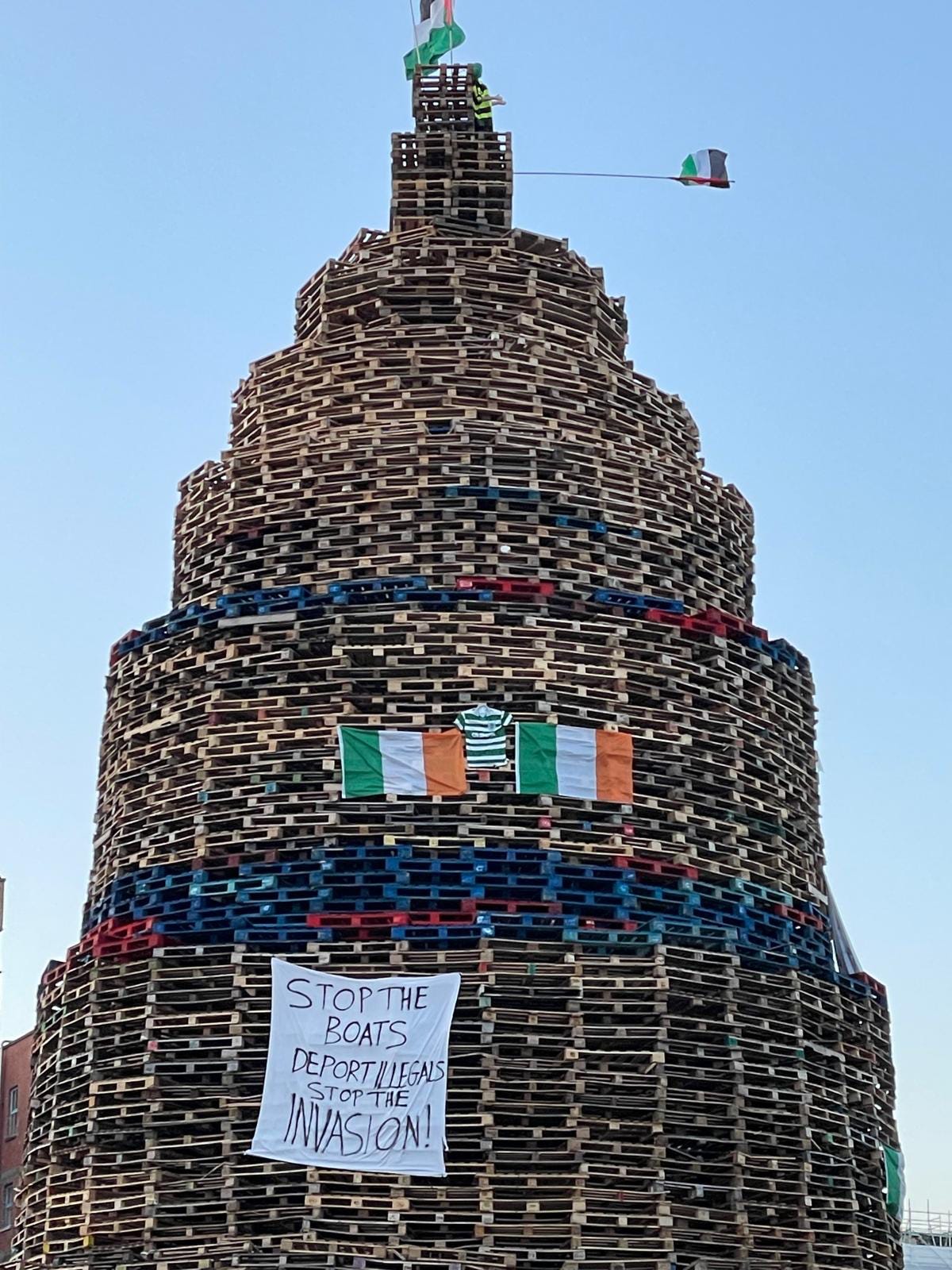
This framing matters. For while the Troubles undeniably had all the elements of internecine conflict, bombings, assassinations, urban insurgency, and the deep embedding of politics into family life the British imagination never absorbed them as a template for civil war. The notion of Britons turning on Britons, of families and neighbours split down irreconcilable lines, remained quarantined in the 17th century, in the ghostly memory of Cavaliers and Roundheads. Modern Britain preferred to treat such violence as aberrant, colonial, or Irish - never truly its own.
The Trump admin’s Anglophilia
In recent times, however, Britain has for the first time been spoken of as the prime candidate for civil war. America, under Pax Trump, has reasserted the state’s monopoly on violence: his administration has dismantled the USAID slush funds, and even ICE agents now move confidently into deep-blue sanctuary cities, meeting only token resistance. While such stability is generally good for a nation, it has deprived a certain class of commentators of their fix — the apocalyptic thrill of speculating about America’s imminent collapse.
Much is spoken about the Americanisation of Britain, but few seem to understand that it is also a two-way street. By happenstance this current administration happens to be the most Anglophilic in perhaps a few generations, they are intensely and personally invested in what goes on here, American boomers watch online demoralisation slop accounts of “Sadiq Khan's London”, and feel horror about a country which they might have emigrated from 400 years ago, but whom they do fill a deep anglosphere connection with.
David Betz
It isn’t just Americans. Increasingly, parts of the British establishment are speaking with an uneasy frankness about the prospect of prolonged civil conflict. Many conservatives were deeply alarmed by the mass pro-Palestine demonstrations from October 2023 onwards, and by their potential electoral consequences. Perhaps the most high-profile voice has been Robert Jenrick, who admitted to being profoundly unsettled at finding himself in a country he no longer recognised.
Among this tendency, one of the more intellectualised readings comes from David Betz in Civil War Comes to the West, Part II: Strategic Realities (Military Strategy Magazine, Spring 2025). Though mocked in some corners of Twitter, Betz at least attempts to grapple with what a civil war in the West would actually look like—something neither the Jenrick camp, the centre-left has or even the Online Right has managed.
In his reading1, Betz draws on military academic Richard J. Norton’s concept of the “feral city” — a dystopian metropolis that has lost the ability to maintain law and order within its boundaries. Such cities are not pure anarchy but fragmented zones of negotiated authority, where gangs, militias, private security, and parallel policing fill the vacuum. Think more Cape Town than Mogadishu — or, for that matter, Mega-City One.
Betz argues that London, Birmingham, Manchester and other Western cities are already sliding from “green” (governed) to “amber” (partially feral), displaying symptoms such as no-go zones, decaying infrastructure, corruption, two-tier policing, and sabotage of state systems (e.g. Blade Runners destroying ULEZ cameras). In a civil war, these cities would be the first to tip fully into “red” ferality, becoming ungovernable while still reliant on rural lifelines of food, power, and transport — lifelines that would immediately become targets for attack.
Betz doesn't do a “day one” scenario but the source material implies the spark would be line essentially a terrorist outrage on the scale of maybe Southport or even the Bataclan. Hundreds are killed, uncensored footage floods social media, and within hours rioting breaks out across London, Birmingham, and Manchester. Nativists torch cars, attack mosques, and storm police stations; in response, minority gangs and Antifa-style networks mount counter-violence. Police are overwhelmed, their lines broken, calls for military reinforcement go unanswered as commanders hesitate to turn soldiers against citizens. By evening, “amber” feral zones in the inner cities slide decisively into “red”: local gangs and vigilantes effectively rule their own boroughs. In the countryside, anger boils over. Farmers blockade roads, energy pylons are sabotaged, and rail lines cut. By the end of the first day, Britain’s life-support systems are faltering, its major cities partitioned into enclaves, and its government visibly stripped of any monopoly on violence.
Criticism
There are major problems with this hypothesis. Chiefly, Betz is careful to avoid naming threat actors directly. Tellingly, the words “Muslim” and “Islam” appear only in the appendix notes, never in the main body of the text. Instead, he couches everything in vague talk about “the fracture of multicultural societies along lines of identity.” But what does this actually mean in practice? Is he referring to the Gaza protestors who exercised their right to march peacefully in broad multiracial coalitions, or to Islamist ghettos in northern towns?
It’s also far from clear how networked these supposed factions really are. Farmers’ protests and ULEZ Blade-Runners may share grievances against a Blairite state, but that does not mean they are coordinating. Likewise, Betz’s city-versus-country framing collapses under scrutiny: the Blade-Runner movement is an urban phenomenon, while farmers’ protests are firmly rural.
In the end, his essay reads less like a concrete analysis of conflict and more like a David Goodhart think-piece—with added AK-47s.
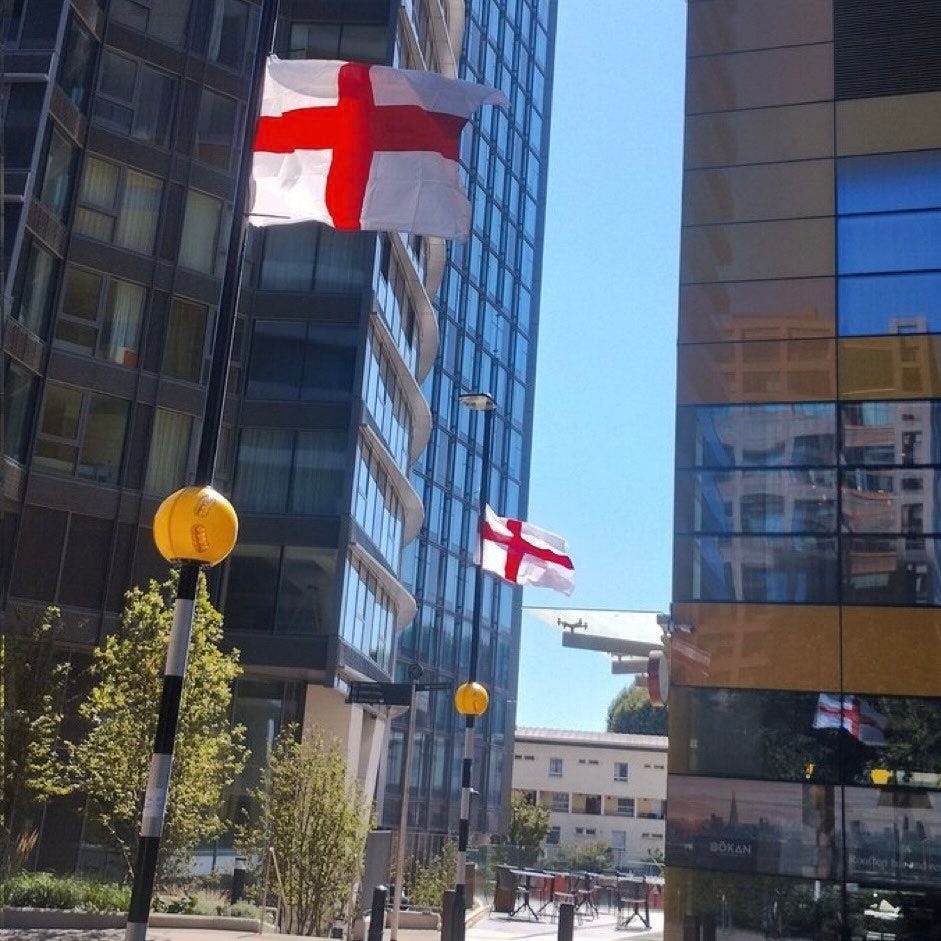
This kind of overgeneralizing creates serious problems when trying to identify the real sources of right-wing populism. Take the asylum hotel protests: the bulk of the anger has been directed not at immigrants as such, but at the government and police for placing young foreign men near schools. That doesn’t mean these protests couldn’t spill over into a broader backlash against mass immigration or even contribute to an ethnogenesis of the British people—after all, activists are already putting up flags on the streets, in what some breathlessly describe as the “Ulsterisation” of the mainland. But crucially, this has not mutated into a generalized anti-Islam movement. The counter-protesters are not grassroots “Five Pillars” types but arms-length state actors like Unite Against Fascism and Stand Up to Racism. For now, the grievances of the protestors remain straightforwardly material: they want the migrants out of their constituency.
Larry’s take
*Where* I agree there is a serious risk of massive unrest is in the Blairite state’s stubborn inability to course-correct. Unlike in 2019, there is no obvious pressure valve—no referendum on the ECHR for example. By convention, an election is still four long years away, which means the public has no major democratic slip road (beyond local and devolved elections) That is a combustible situation.
Instead of adjusting, Labour MPs respond with their usual blend of arrogance and deafness. They dig in their heels as living standards slide, crime rises, and public services collapse around them. The parallel with late-stage Soviet regimes is hard to ignore: a ruling class clinging to a failed model, convinced that repeating slogans louder will substitute for reality, and dismissing any expression of popular discontent as the work of “foreign agents.”[3]

Worse still, spurred on by opinion polling with dubious methodology, Labour has decided to escalate. This week, they deployed their pet project, the Online Safety Bill, as a cudgel against Nigel Farage—absurdly accusing him of wanting to promote a “revenge porn culture.” This is a government trapped in a complete feedback loop, impervious the danger they find themselves in.[4]
Earlier in this essay I noted the thinness of a British civil war canon, but there is one related genre I set aside: the coup-panic dramas of the 1970s and ’80s. In those years, Britain seemed on the brink — inflation rampant, the IMF looming, strikes paralysing the country, and bombs going off in the capital. For some, it was not unthinkable that the army might be summoned to “restore order.” The creation of General Sir Walter Walker’s Civil Assistance, a private network of veterans pledged to defend Britain from “anarchy and communism,” only added fuel to the paranoia.
Could such a thing happen again? Probably not in the literal sense of tanks at Heathrow, though it is worth recalling that such a show of force did occur, when the Army staged a security exercise there in the 1970s without Harold Wilson’s consent.[5] Britain’s officer class today is too enmeshed in NATO, too diminished in number, and, frankly, too “woke” to contemplate a coup. The intelligence services, with their history of briefing against Wilson, might harbour the instincts, but any such designs would flounder on the competing factionalism of the agencies themselves. What is more plausible is something closer to 1975: a government collapsing under the weight of crisis, legitimacy draining away, a prime minister forced to resign, and fresh elections called in the hope of national renewal.
That is the real “very British coup” not a junta seizing power or civil war, but a brittle state unravelling under pressure until the political class improvises some emergency reset. Less “Ceaușescu on the balcony,” more “caretakers government in Whitehall.” And it is precisely this sort of genteel breakdown, quiet, procedural, bloodless on the surface, that may be the more likely path for Britain, even as its cities simmer and its margins riot.
[2] https://x.com/arisroussinos/status/1887092628618928261
[3] https://x.com/TrisOsborneMP/status/1955174723051979184
[4] https://www.telegraph.co.uk/politics/2025/08/16/rayner-accuses-farage-fuelling-revenge-porn-culture/
https://www.militarystrategymagazine.com/article/civil-war-comes-to-the-west-part-ii-strategic-realities/
This is a very reasonable piece but I would like to know how you see violence occurring. Muslim militias protecting their mosques? "No-go zones" where any Kurdish barbers are immediately burned out?
I think this is a very optimistic take.
I'm fairly sure that if the UK were to undergo a Bataclan or 7/7 islamist mass casualty attack then there would be widespread civil disorder, particularly in the urban areas, and it wouldn't be at all easy for the authorities to get it under control.
The Southport unrest kicked off after a relatively minor event involving one guy with a knife and three fatalities. It was horrendous, but I wouldn't be surprised if more kids die in car crashes each week.
Another concert bombing with dozens of children killed and maimed and a very strained social contract would break.
There are middle aged housewives protesting against mass immigration (aka invasion) on the streets of Epping. Imagine what the angry young men are feeling, when they see a threat to their wives and daughters simply going to the shops and school?
I really think that there willl be a trigger event in the next 12 months or so, and the response will be something that historians will write about.